
 Beautiful sceneries, beautiful wildlife
  Hundreds of holiday destinations and features to behold
  The roaring king of the jungle
  The phenomenal eighth wonder of the world - the wildebeest migration
  Rhinos, black and white, can be found in Kenya and Tanzania
  Dine with the giraffes at Giraffe Manor
  We have flying safaris to different destinations
  Variety of camping safaris to select from
  The camps are clean, with all necessary facilities
  0
0  1
1  2
2  3
3  4
4  5
5  6
6  7
7  8
8 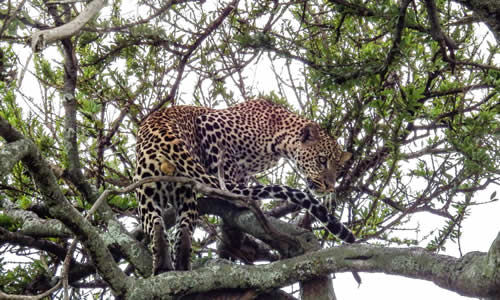
Serengeti National Park, in northern Tanzania, comprising 1.5 million hectares of savannah. Known for its massive annual migration of wildebeest and hundreds of thousands of gazelles and zebras. Seeking new pasture, the herds move north from their breeding grounds in the grassy southern plains. Many cross the marshy western corridor’s crocodile-infested Grumeti River. Others veer northeast to the Lobo Hills, home to black eagles. Black rhinos inhabit the granite outcrops of the Moru Kopjes.
The ecosystem supports 2 million wildebeests, 900,000 Thomson’s gazelles and 300,000 zebras as the dominant herds. Other herbivores include 7,000 elands, 27,000 topis, 18,000 hartebeests, 70,000 buffalos, 4,000 giraffes, 15,000 warthogs, 3,000 waterbucks, 2,700 elephants, 500 hippopotamuses, 200 black rhinoceroses, 10 species of antelope and 10 species of primate. Major predators include 4,000 lions, 1000 leopards, 225 cheetahs, 3,500 spotted hyenas and 300 wild dogs. Of these, the black rhino Diceros bicornis, leopard Panthera pardus, African elephant Loxodonta africana and cheetah Acynonix jubatus are listed in the IUCN Red List. There are over 500 species of birds that are perennially or seasonally present in the Park, of which five species are endemic to Tanzania. The Park has the highest ostrich population in Tanzania.
The best times to visit Serengeti National Park are from January to February during wildebeest calving or from June through September, although the animals are abundant throughout the year